Would You Buy a House Without an Inspection?
Most sensible property buyers would never dream of purchasing a house without a professional inspection. Yet countless boat buyers hand over substantial sums for used vessels without arranging a marine survey. This disparity in due diligence is remarkable when you consider that boats face far harsher conditions than houses—constant exposure to water, salt, UV radiation, and mechanical stress.
📋 Quick Summary
- Inspect Before Buying: Avoid costly hidden issues
- Lenders & Insurers Require: Surveys for financing, coverage
- Negotiate Price: Use findings to reduce cost
- Detect Hidden Damage: Professionals find unseen problems
Used boats can harbour hidden problems that even experienced eyes miss. Osmotic blistering beneath the waterline, delaminated fibreglass, corroded through-hulls, failing stringers, and compromised electrical systems often remain invisible until they become expensive emergencies or dangerous failures. The financial risk of skipping a marine survey before buying a boat extends beyond repair costs; it includes potential loss of the entire vessel, liability issues, and insurance complications. A thorough pre-purchase survey is your essential safeguard against inheriting someone else’s neglected problems.
In short: Unlike home buyers, many boat buyers overlook professional inspections despite vessels’ harsh environments and potential unseen issues like osmotic blistering.
✅ TIP: Always hire a certified marine surveyor for pre-purchase inspections.
Why a Marine Survey Is Non-Negotiable for Used Boat Buyers
Beyond peace of mind, a marine survey serves several practical purposes that make it virtually essential for any serious boat purchase. Lenders financing boat purchases often require a current survey before approving loans. They need assurance that their collateral—your prospective boat—is worth the amount being borrowed and is in seaworthy condition. Without a survey, securing marine financing becomes significantly more difficult.
Insurance companies frequently require surveys as well, particularly for older vessels or boats above certain value thresholds. Insurers want documentation of the vessel’s condition before accepting liability. Some underwriters refuse coverage entirely without a recent survey, whilst others may limit coverage or charge higher premiums for unsurveyed boats.
Survey findings provide powerful leverage in price negotiations. When a surveyor identifies issues requiring attention, you gain concrete evidence to support requests for price reductions or seller-funded repairs. Many buyers recover the entire cost of their survey—and considerably more—through negotiated price adjustments based on documented deficiencies.
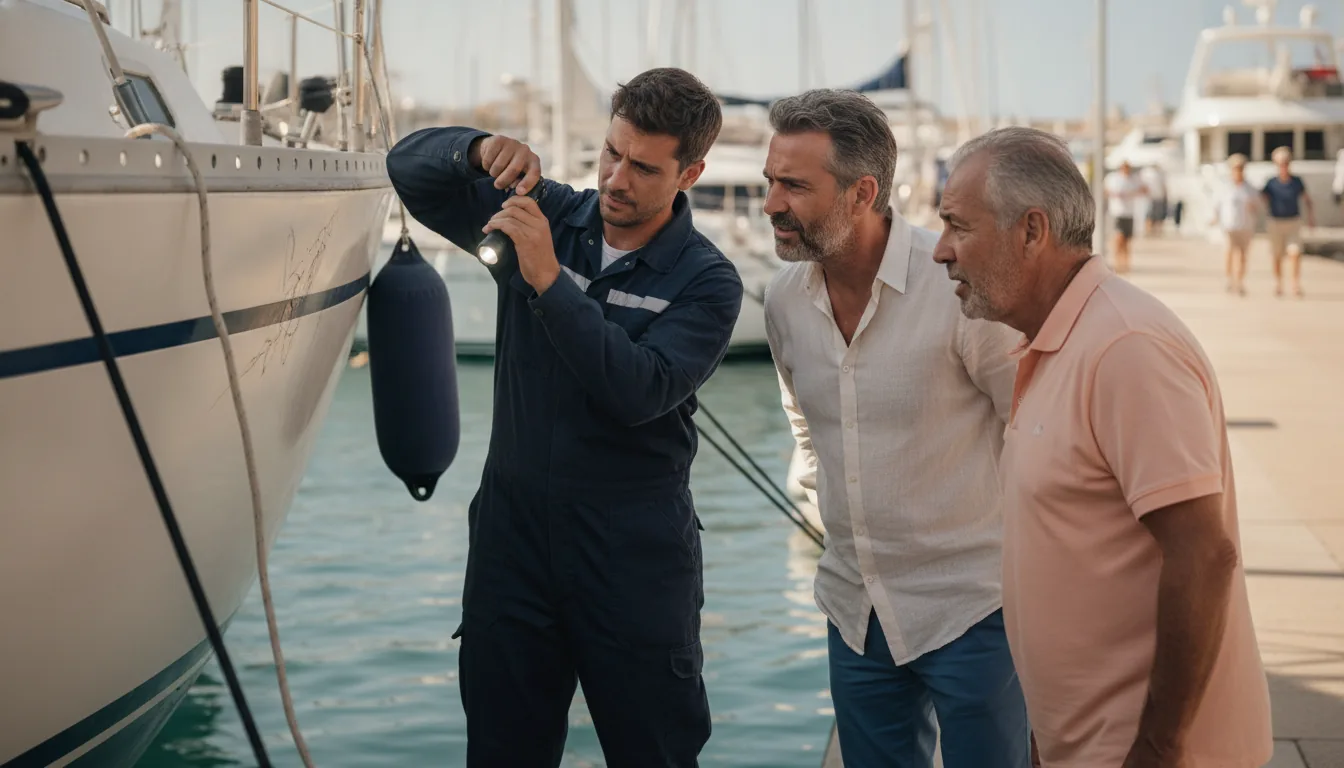
Perhaps most importantly, structural issues in boats are often invisible to the untrained eye. Sellers may be unaware of problems, or in some cases, may deliberately conceal them. Core rot in decks and hulls, stress cracks indicating structural fatigue, improperly repaired damage, and deteriorating fuel tanks all require professional assessment to detect. What appears to be a well-maintained yacht might harbour problems costing tens of thousands to remedy. A qualified marine surveyor brings the expertise and tools needed to reveal what lies beneath attractive gelcoat and fresh varnish.
Bottom line: A marine survey is crucial for used boat buyers to secure financing and insurance.
✅ TIP: Inspect the vessel’s hull-to-deck joint and stringers for delamination.
What Marine Surveyors Actually Check: A Complete Breakdown
Understanding what a marine surveyor examines helps you appreciate the value of this professional assessment. A comprehensive survey covers virtually every aspect of the vessel, from stem to stern and keel to masthead.
Hull Integrity Inspection
The hull represents your boat’s primary defence against the sea, making its inspection paramount. Surveyors examine the hull for osmotic blistering, impact damage, stress cracks, and delamination. They use moisture meters to detect water intrusion in fibreglass laminates and tap the hull systematically to identify voids or delaminated areas by sound. For metal hulls, they check for corrosion, pitting, and weld integrity. Wooden hulls receive scrutiny for rot, fastener deterioration, and plank condition. Any previous repairs are evaluated for quality and completeness.
Structural Components Assessment
Beyond the hull shell, surveyors assess the structural framework that gives the boat its strength and shape. This includes stringers, floors, bulkheads, transom, deck-to-hull joint, and chainplates. They look for signs of stress, movement, water damage, and inadequate construction. The keel attachment receives particular attention, as keel bolt failure can be catastrophic. Rudder bearings, stuffing boxes, and shaft alignments are checked for wear and proper function.
Systems Evaluation
Modern boats contain complex systems requiring expert assessment. Surveyors examine electrical systems for proper installation, adequate wire sizing, corrosion, and compliance with safety standards. Plumbing systems are checked for leaks, proper venting, and seacock condition. Fuel systems receive scrutiny for tank integrity, line condition, and potential fire hazards. Steering systems are tested for smooth operation and mechanical soundness. Bilge pumps, through-hulls, and sea strainers are all evaluated.
Safety Equipment Check
A survey includes verification of safety equipment presence and condition. Life jackets, fire extinguishers, flares, navigation lights, and sound signals are checked against regulatory requirements. The surveyor notes expired items, missing equipment, and anything failing to meet current standards. This information proves valuable for both safety planning and insurance purposes.
Engine Condition Analysis
Whilst surveyors are not mechanics, they assess engine condition through visual inspection, operational testing, and examination of maintenance records. They look for leaks, corrosion, belt condition, hose integrity, and signs of overheating or poor maintenance. Many buyers opt for an additional mechanical survey by a qualified marine engineer for a more detailed engine assessment, particularly on larger or more expensive vessels.
Types of Marine Surveys
Different situations call for different survey types. A condition and valuation survey, often abbreviated as C&V, provides the most comprehensive assessment for pre-purchase situations. It documents the vessel’s current condition and establishes fair market value. Insurance surveys focus on determining whether a vessel meets underwriting requirements and may be less detailed than C&V surveys. Damage surveys assess specific damage from groundings, collisions, storms, or other incidents and are typically conducted for insurance claims.
Choosing a Qualified Surveyor
The value of a survey depends entirely on the competence of the surveyor conducting it. SAMS (Society of Accredited Marine Surveyors) and NAMS (National Association of Marine Surveyors) certified surveyors have demonstrated their knowledge and adhere to professional standards. Always verify credentials and ask for references. A surveyor with specific experience in your boat’s type—sailing yachts, motor cruisers, or commercial vessels—brings relevant expertise to the inspection.
The Importance of Haul-Out
A haul-out is required for a thorough inspection. With the boat out of the water, the surveyor can examine the entire hull bottom, keel, rudder, propeller, shaft, and through-hulls—all areas hidden when the boat floats. Whilst some surveys are conducted in-water, these provide incomplete information about underwater components. For any serious purchase, insist on a haul-out survey. The additional expense is justified by the comprehensive assessment it enables.
When searching for your next boat on Aiboatbuddy, keep survey requirements in mind. The platform’s detailed listings help you identify promising candidates worth the investment of a professional survey, allowing you to focus your resources on vessels that meet your initial criteria before committing to inspection costs.
Remember: Marine surveyors meticulously inspect hull integrity for signs of damage or moisture.
✅ TIP: Check electrical systems, including wiring, connections, and battery condition.
Marine Survey Costs and Timeframes: What to Expect
Understanding the financial and time commitments involved helps you plan your boat purchase properly. Marine survey costs typically run approximately $20 per foot of boat length. For a typical recreational vessel in the 15 to 35 foot range, this translates to a total survey cost of around $525. This investment represents a fraction of the boat’s value whilst potentially saving you from costly mistakes.
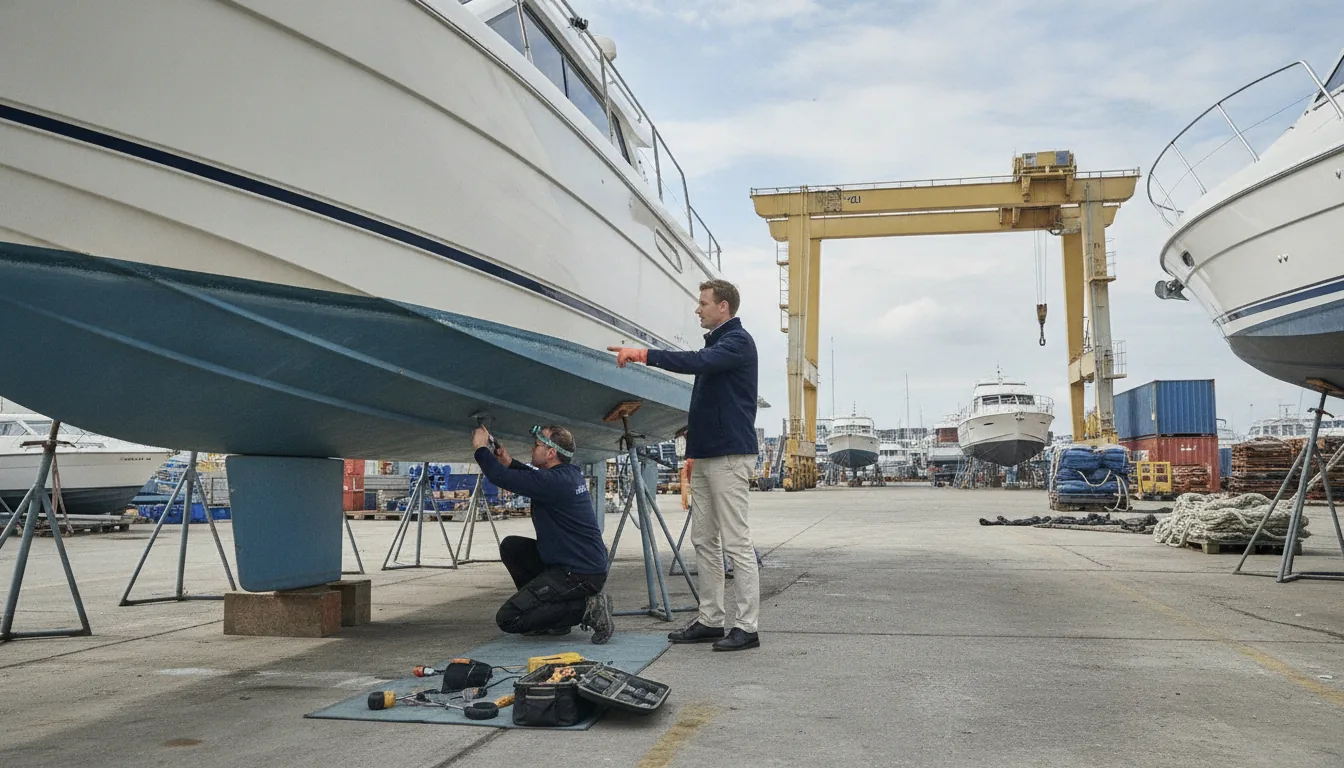
The survey itself typically takes 4.5 hours, though this varies with boat size, complexity, and condition. Larger vessels with extensive systems require more time, as do boats with numerous issues requiring documentation. Plan to be present for the entire survey—this is your opportunity to learn about the boat and ask questions.
If a haul-out is required—and it should be for any serious purchase—expect additional costs of approximately $275 for the yard’s services. This covers lifting the boat, blocking it safely, and returning it to the water after inspection. Some yards charge by the hour, whilst others have flat rates. Confirm costs with the marina before scheduling.
Survey reports are typically valid for 60 days, though this can vary depending on the purpose. Lenders and insurers may have specific validity requirements. If your purchase timeline extends beyond this period, you may need an updated survey or addendum. Factor this into your planning, particularly if negotiations become protracted or financing arrangements take longer than expected.
When budgeting for your boat purchase, include survey costs from the outset. The combined expense of survey and haul-out, typically under $1,000 for most recreational boats, pales beside the potential cost of undiscovered problems. Consider it essential due diligence rather than an optional extra.
Key takeaway: Marine surveys cost about $20/foot and take 4.5 hours.
How to Arrange a Marine Survey: Step-by-Step
Organising a marine survey requires coordination between several parties, but following a systematic approach ensures smooth execution.
Begin by finding a SAMS or NAMS certified surveyor with experience relevant to your boat type. Request references and verify credentials. Ask about their availability and typical turnaround time for reports. Once you have identified a suitable surveyor, confirm their fee and what their survey includes.
Next, schedule a haul-out with the marina where the boat is located. Coordinate the date with your surveyor to ensure their availability aligns with yard scheduling. Confirm who is responsible for haul-out costs—typically the buyer, though this can be negotiated with the seller. Ensure the seller or broker knows the schedule and can provide access to the boat.
Plan to be present during the survey. This is not merely advisable but essential. Accompanying the surveyor allows you to see issues firsthand, ask questions about findings, and gain valuable knowledge about the boat’s systems and maintenance requirements. The survey becomes an educational experience as well as an assessment.
Throughout the inspection, ask questions freely. Good surveyors welcome buyer engagement and explain their findings as they work. Enquire about the severity of issues, repair costs, and safety implications. Understanding the context of findings helps you make informed decisions.
After the inspection, request a written report documenting all findings with photographs. Professional survey reports are detailed documents that become part of the boat’s permanent record. Review the report carefully and ask for clarification on any points you do not understand.
Finally, use the survey findings in price negotiation. Documented deficiencies provide concrete grounds for discussing price adjustments. Present findings professionally and focus on substantive issues rather than minor cosmetic matters. Sellers expect some negotiation based on survey results; this is standard practice in boat transactions.
In short: Hire a certified marine surveyor, then schedule boat haul-out at marina.
⚠️ WARNING: Never Buy a Used Boat Without a Marine Survey: Risk Losing Your Entire Investment.
Protect Your Investment: Survey Before You Sign
A marine survey before buying a boat represents one of the wisest investments in your boating journey. The relatively modest cost of professional inspection provides protection against potentially catastrophic financial losses, ensures you understand exactly what you are purchasing, and gives you documented leverage for fair pricing.
The small upfront expense of a survey pales against the potential savings from avoided repairs, negotiated price reductions, and the simple confidence of knowing your boat’s true condition. Buying without a survey is a gamble where the stakes—your money, your safety, and your boating enjoyment—are simply too high.
Ready to find a boat worth surveying? Browse current listings on Aiboatbuddy to discover vessels that match your requirements. With detailed information and comprehensive search tools, you can identify promising candidates and begin your journey toward informed boat ownership. Your perfect boat is waiting—just make sure you survey it first.
Bottom line: A pre-purchase boat survey safeguards your investment by identifying issues, enabling negotiation, and providing peace of mind.