Would You Trust a Chatbot to Diagnose Your Engine?
Your marine diesel is running rough, and you need answers fast. You type your symptoms into a popular AI chatbot and receive a confident, detailed response. But how do you know the advice is actually correct? This question has become increasingly relevant since “hallucinate” was named Cambridge Dictionary’s Word of the Year in 2023, specifically in reference to AI generating false information. When it comes to boats, the stakes are particularly high. Incorrect diagnostic advice can lead to costly repairs, stranded vessels, and genuine safety concerns. Before you act on that chatbot’s recommendation, it’s worth understanding why AI accuracy in specialised domains like boating deserves careful scrutiny.
In short: Trusting a chatbot for engine diagnosis carries risks due to potential AI “hallucinations”.
📋 Quick Summary
- Verify AI Advice: Don’t trust chatbot diagnoses blindly
- Check Engine Specs: Wrong info can cause severe damage
- Market Data Risk: AI may over/undersell your vessel
- Boat-Specific Factors: Generic advice may be harmful
✅ TIP: Always verify AI advice with a professional or official manual.
Why AI Accuracy Matters for Boat Owners
AI hallucinations occur when artificial intelligence systems generate responses that sound authoritative and confident but contain fabricated or incorrect information. The AI doesn’t know it’s wrong, which makes these errors particularly dangerous. For boat owners, the consequences can be significant and varied.

Consider what happens when an AI provides incorrect specifications for your engine. Using the wrong oil viscosity, incorrect fuel mixture ratios, or improper torque settings can lead to accelerated wear, component failure, or even catastrophic engine damage. These aren’t theoretical concerns but practical realities that experienced boat owners and marine mechanics encounter regularly.
Unverified pricing information presents another substantial risk. If you’re buying or selling a vessel, relying on AI-generated valuations that aren’t grounded in actual market data could mean overpaying by thousands or underselling your boat significantly. The marine market has its own dynamics, regional variations, and seasonal fluctuations that generic AI systems simply cannot access.
Generic troubleshooting advice often misses boat-specific factors entirely. Marine environments present unique challenges including saltwater corrosion, humidity exposure, and the particular demands placed on engines that operate at sustained loads. Advice designed for automotive applications or general machinery may be actively harmful when applied to marine equipment.
Perhaps most frustrating is the phenomenon of made-up part numbers. AI systems can generate part numbers that look legitimate but don’t actually exist, sending you on fruitless searches through marine suppliers and wasting valuable time when your boat is out of commission.
Bottom line: Incorrect AI advice could damage boats or endanger users.
✅ TIP: Use AI as a starting point, not final answer.
Understanding Why Generic AI Struggles With Boats
To understand why general-purpose AI chatbots perform poorly on marine topics, we need to examine how these systems work and where their limitations lie. Generic AI models are trained on vast amounts of internet text, but they have no access to real boat sales data or current market prices. They cannot query databases of actual listings, recent transactions, or regional market conditions. Any pricing information they provide is essentially an educated guess based on whatever fragments appeared in their training data.
Similarly, these systems lack access to manufacturer specifications databases. While some specification data exists in their training corpus, it may be incomplete, outdated, or simply wrong due to transcription errors in the original sources. There’s no mechanism for the AI to verify this information against authoritative manufacturer documentation.
Engine manual knowledge represents a particular gap. Detailed service procedures, torque specifications, troubleshooting flowcharts, and maintenance intervals are typically found in technical manuals that aren’t freely available on the internet. Generic AI has no engine manual knowledge base to draw from, leaving it to approximate or fabricate technical details.
Training data knowledge cutoffs create another fundamental problem. AI models are trained at a specific point in time, meaning all their information is inherently outdated. New boat models, updated specifications, recalled parts, and revised service procedures that emerged after the training cutoff simply don’t exist in the AI’s knowledge.
Crucially, generic AI cannot verify claims against authoritative sources in real-time. When you ask a question, the AI generates a response based on patterns in its training data, with no ability to check whether the information is current or accurate. This limitation is compounded by the fact that boats represent a specialised domain with considerably less training data available compared to mainstream topics. There simply isn’t as much boat-specific content on the internet as there is about, say, consumer electronics or popular software.
The solution to these limitations lies in a technology called Retrieval-Augmented Generation, or RAG. Rather than relying solely on information baked into the AI during training, RAG systems connect to external knowledge bases at query time. When you ask a question, the system first retrieves relevant information from verified databases, then uses that information to generate an accurate response.
Research from Meta AI has shown that RAG dramatically reduces hallucinations by grounding responses in actual data rather than statistical patterns. This approach enables something that pure language models cannot provide: source citations. When an AI system can tell you exactly where its information came from, you gain the ability to verify claims independently.
This is precisely the approach taken by specialised boat AI systems. AIBoatBuddy, for instance, maintains a vector database containing over 150 boat manuals, enabling the system to retrieve accurate technical specifications rather than guessing at them. Combined with real market data from actual listings, this architecture delivers the domain depth and verification capabilities that generic AI fundamentally lacks.
The contrast between generic and specialised AI becomes clear when you consider what each offers. Generic AI provides broad knowledge across countless topics but lacks depth in any particular domain. It cannot verify information or cite sources. Specialised AI trades breadth for domain expertise, connecting to verified data sources and providing the transparency needed to build genuine trust. For technical queries where accuracy matters, this difference is substantial.
Remember: Generic AI lacks real-world marine data for accurate pricing.
✅ TIP: Cross-check AI suggestions with multiple reliable sources.
The Research Behind AI Hallucinations and Solutions
The problem of AI hallucination isn’t merely anecdotal. It has attracted serious academic attention and research investment. Oxford University published significant hallucination research in 2024, advancing methods for detecting and reducing false outputs from generative models. This work, published in Nature, represents the kind of rigorous scientific investigation that validates concerns about AI reliability while pointing toward solutions.
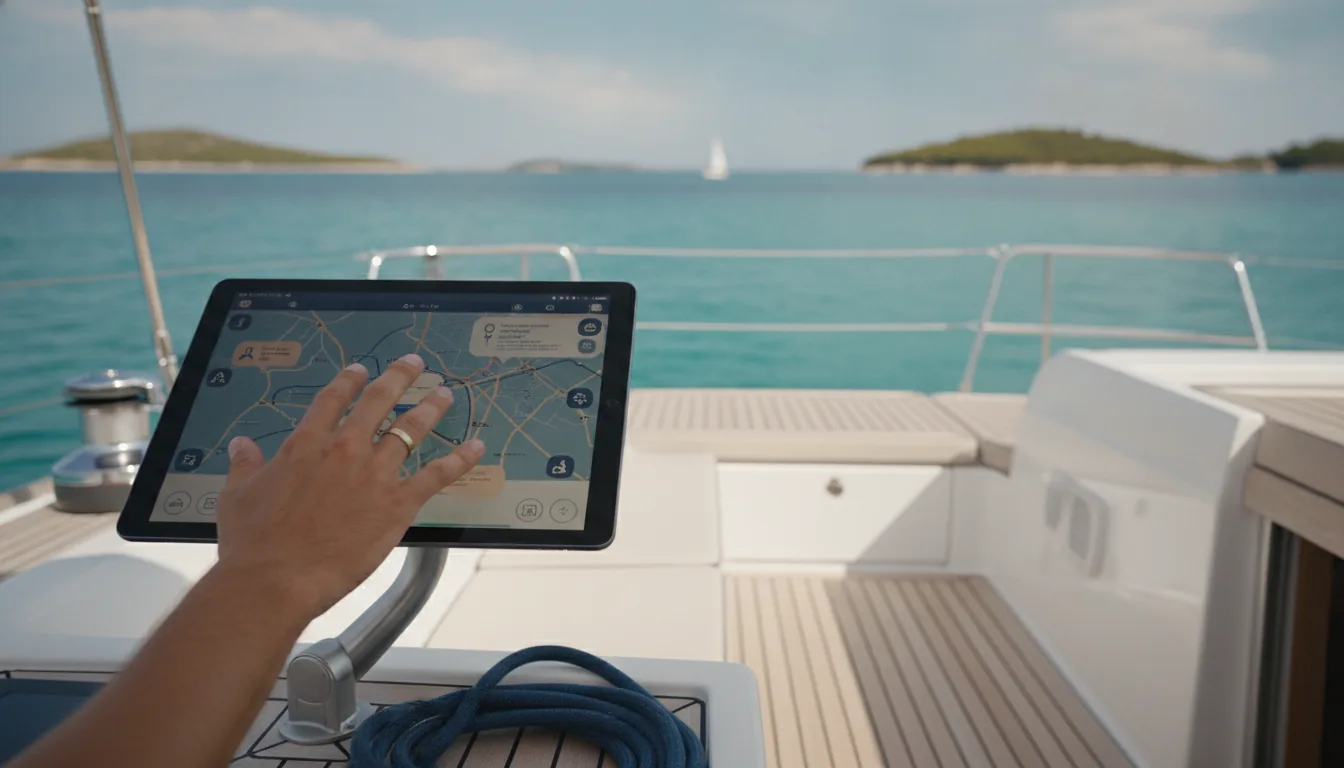
MIT Sloan has examined the RAG approach specifically, finding that it improves both factual accuracy and user trust. The ability to cite sources transforms the user relationship with AI from blind faith to informed verification. When you can check where information came from, you can make better decisions about whether to act on it.
The recognition of “hallucinate” as Cambridge Dictionary’s Word of the Year in 2023 signals how mainstream this concern has become. It’s no longer a technical issue discussed only by AI researchers but a phenomenon that affects anyone using these tools for consequential decisions.
Enterprise applications have responded by adopting RAG where accuracy is critical. Industries from healthcare to legal services to finance have recognised that AI hallucinations represent unacceptable risks in professional contexts. The marine industry, with its combination of technical complexity and safety implications, falls squarely into this category.
AIBoatBuddy’s approach reflects these research findings directly. With over 150 boat manuals integrated into a vector database, the system retrieves verified technical information rather than generating plausible-sounding approximations. This architecture represents the practical application of academic insights about how to make AI systems more reliable and trustworthy.
Key takeaway: Oxford & MIT research validate AI hallucination issues and propose detection/reduction methods.
How to Evaluate AI Boat Advice Before You Trust It
Whether you’re using generic AI, specialised tools, or any other information source, developing skills for evaluating advice quality protects you from costly errors. These practical steps will help you assess AI-generated boat advice before acting on it.
First, check whether the AI cites sources you can verify. A system that tells you where its information comes from enables you to confirm accuracy independently. If an AI provides specifications, ask where those numbers originated. Reputable systems should be able to point you to manufacturer documentation, service manuals, or other authoritative sources.
Second, ask for specific part numbers and cross-reference them. This is an excellent hallucination test. If an AI provides a part number, search for it through marine suppliers or manufacturer databases. Fabricated part numbers will fail this check immediately, revealing the reliability of the information source.
Third, maintain healthy scepticism toward confident claims that lack data backing. AI systems are designed to sound authoritative regardless of their actual knowledge. Responses delivered with certainty are no more likely to be correct than those expressed tentatively. What matters is whether verifiable evidence supports the claims.
Fourth, prefer AI tools with access to real databases. Systems connected to actual market data, manufacturer specifications, and technical documentation can provide information that pure language models cannot. This architectural difference has practical implications for accuracy.
Fifth, use specialised boat AI for technical queries. General-purpose chatbots may suffice for casual questions, but when you need accurate specifications, troubleshooting guidance, or market valuations, purpose-built tools deliver better results. The domain expertise makes a measurable difference.
A useful tip for establishing trust: test any AI with questions you already know the answer to. If you have documentation for your boat’s engine specifications, ask the AI and compare responses. This calibration helps you understand how much confidence to place in answers to questions where you lack independent verification.
In short: Verify AI’s sources and question provided data.
⚠️ WARNING: Never Trust Chatbot Diagnostics Without Verification
Get Boat Advice You Can Actually Trust
Generic AI chatbots lack the boat-specific grounding necessary for reliable marine advice. Without access to real market data, manufacturer specifications, and technical manuals, these systems fill gaps with plausible-sounding but potentially incorrect information. The consequences for boat owners range from wasted time to costly mistakes.
RAG technology offers a solution by connecting AI to verified external data at query time. This approach, validated by research from major institutions, dramatically reduces hallucination risk while enabling the source citations that build genuine trust.
If you’re making buying decisions or need technical information about boats, consider using tools designed specifically for these queries. AIBoatBuddy’s buyer reports draw on real market data and verified specifications, providing the accuracy and transparency that boat owners deserve. Try a buyer report at https://aiboatbuddy.com/buy-report/ and experience the difference that grounded AI makes.
Bottom line: RAG tech provides accurate marine advice by linking AI to real-time, verified data.