Are You Paying Too Much for Your Next Boat?
When you find a boat that catches your eye, how do you know whether the asking price reflects its true market value? The seller claims it’s a fair deal. The broker insists it’s priced to sell. But without access to comprehensive market data, you’re essentially negotiating in the dark. This pricing uncertainty has long plagued boat buyers, turning what should be an exciting purchase into a stressful guessing game.
📋 Quick Summary
- Analyze 100s of boat factors in seconds
- Update valuation in real time
- Identify nonlinear variables affecting value
- Save buyers up to 30% on purchases
The challenge lies in the sheer complexity of boat valuation. Unlike cars with standardised mileage-based depreciation, boats vary wildly in condition, equipment, maintenance history, and regional demand. Traditional valuation methods simply cannot account for all these variables in real time. This is precisely where artificial intelligence is transforming the landscape, offering buyers unprecedented access to data-driven insights that reveal what a boat is actually worth in today’s market.
In short: Boat buyers struggle due to lack of accessible market data for accurate price assessment.
✅ TIP: Use AI-powered valuation tools for real-time market data.
Why Traditional Boat Valuation Methods Fall Short
For decades, boat buyers have relied on bluebook estimates and static price guides to gauge fair market value. These resources served their purpose in a slower-moving market, but they carry fundamental limitations that become increasingly problematic in today’s dynamic environment. Bluebook values are typically updated periodically, meaning they reflect historical averages rather than current market conditions. When demand shifts or economic factors change, these guides lag behind reality.
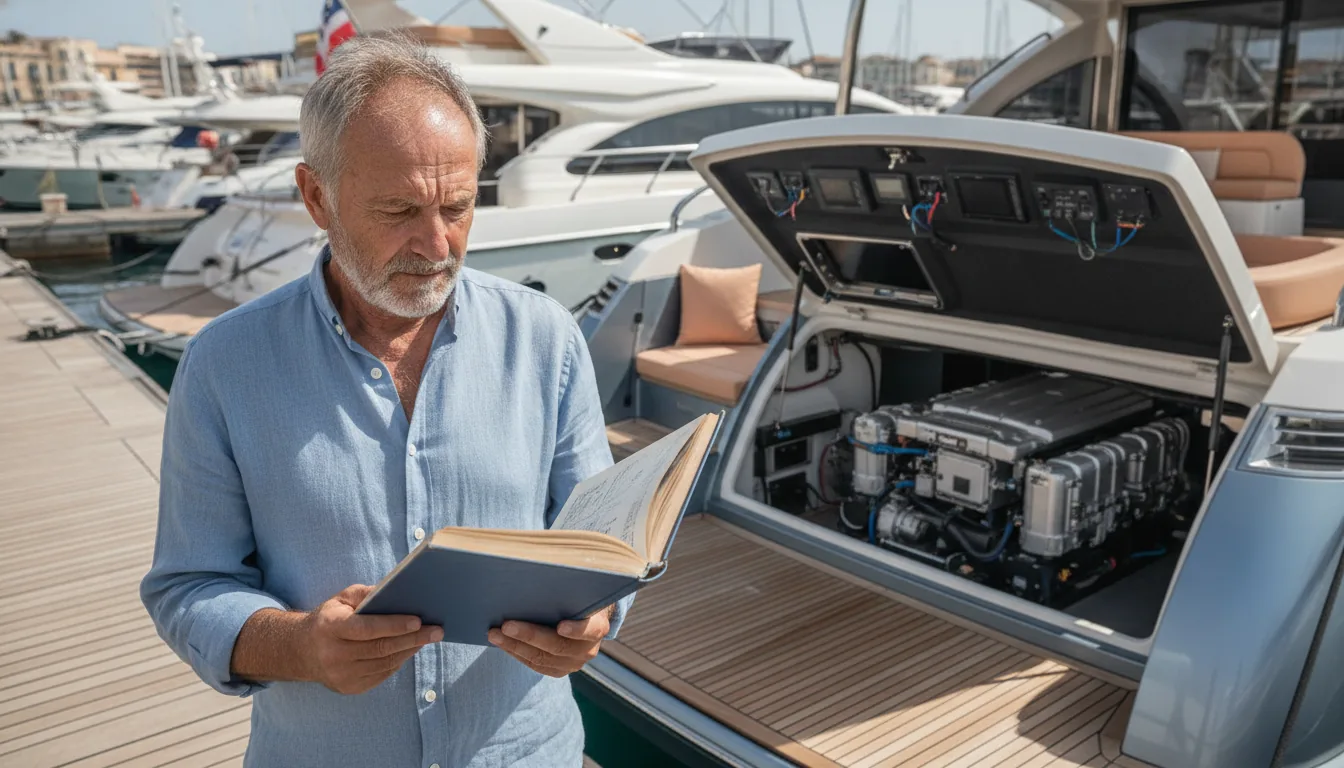
The deeper problem lies in what industry experts call nonlinear variables. A boat’s value depends on far more than its make, model, and year. Condition can swing values dramatically, but condition itself encompasses dozens of factors: hull integrity, engine hours, cosmetic wear, electrical systems, and maintenance documentation, to name a few. Equipment packages create further complexity. Two identical boats might differ by tens of thousands in value based on electronics, safety gear, and upgraded components. Location matters too, as regional demand varies significantly between coastal markets, lake communities, and inland waterways.
Traditional valuation methods struggle to contextualise these interconnected variables. They might provide a baseline figure, but they cannot tell you whether that specific boat with those particular upgrades in that exact location represents good value. The consequences of this information gap cut both ways. Buyers overpay for boats that appear reasonably priced but carry hidden deficiencies. Equally, buyers miss excellent opportunities because they cannot recognise when a slightly higher asking price actually represents fair value for superior equipment or condition. Real-time market data has become essential for navigating these complexities with confidence.
Bottom line: Traditional boat valuation methods like bluebooks and static price guides struggle to keep up with real-time market dynamics.
✅ TIP: Inspect the boat’s maintenance history documents.
How AI Boat Valuation Actually Works
Artificial intelligence brings computational power and pattern recognition capabilities that fundamentally change how boat valuations are performed. Rather than relying on simplified averages, AI systems analyse tens of thousands of sales records to identify genuine market patterns. This massive dataset allows the technology to understand not just what boats sell for on average, but how specific combinations of factors influence real-world transaction prices.
The contextualisation of nonlinear variables represents one of AI’s most significant advantages. Machine learning algorithms can weigh multiple factors simultaneously, understanding how they interact rather than treating each in isolation. A boat with high engine hours might normally warrant a lower valuation, but AI can recognise when exceptional maintenance documentation, recent overhauls, or premium components offset that concern. This nuanced analysis mirrors how experienced marine surveyors think, but operates at scale and speed impossible for human evaluation alone.
Seasonal demand shifts present another area where AI excels. The boat market follows predictable seasonal patterns, with demand typically peaking before summer and softening through winter months. However, these patterns vary by boat type, region, and economic conditions. AI systems detect these shifts in real time, adjusting valuations to reflect current market dynamics rather than annual averages. A boat listed in November might represent better value than the same vessel listed in April, and AI can quantify that difference.
Modern AI valuation tools have developed sophisticated photo interpretation capabilities. By analysing listing images, these systems can recognise valuable features, assess visible condition indicators, and identify potential concerns that might affect value. This visual analysis adds another dimension to the valuation process, extracting meaningful data from information that traditional methods would overlook entirely.
Cross-regional comparison capabilities expand the buyer’s perspective beyond local markets. A boat might appear fairly priced in one region but represent poor value compared to similar vessels available elsewhere. AI systems compare boats across different geographic areas, accounting for transportation costs and regional price variations to identify genuine opportunities. This broader market view prevents buyers from overpaying simply because local inventory is limited.
Perhaps most importantly for practical buying decisions, AI analyses asking prices at scale — including how they develop over a listing’s lifetime. Price drops and time on market matter enormously: they reveal where seller aspirations exceed what the market will bear. AI systems track these signals, identifying listings where asking prices significantly exceed likely transaction values. This insight proves invaluable during negotiations, providing concrete data to support reasonable offers.
The Aiboatbuddy Buy Report applies these AI capabilities to specific boats you’re considering. Rather than general market statistics, you receive targeted analysis of individual listings, including market comparison data, pricing insights relative to similar vessels, and identification of potential risk factors. This practical application transforms abstract AI capabilities into actionable buying intelligence.
Risk Assessment and Red Flag Detection
Beyond pricing, AI valuation tools provide valuable risk assessment before purchase. By comparing listing details against market norms and historical patterns, these systems can identify potential red flags that warrant further investigation. Unusual pricing relative to comparable boats, inconsistent information across listings, or specifications that deviate from factory standards can all indicate issues requiring attention. This automated scrutiny adds a layer of due diligence that helps buyers focus their inspection efforts on areas of genuine concern.
Remember: AI boat valuation uses vast data and pattern recognition to assess specific factors’ impact on pricing.
✅ TIP: Compare with similar boats sold in the same region within 3 months.
The Numbers Behind the AI Boat Valuation Revolution
The rapid adoption of AI in maritime applications reflects growing recognition of its practical value. According to research commissioned by Lloyd’s Register, the maritime AI market reached 4.13 billion USD in 2024, a remarkable increase from 1.47 billion USD in 2023. This near-tripling of market value in a single year demonstrates how quickly the industry is embracing artificial intelligence solutions across various applications, including boat valuation and market analysis.

Looking ahead, industry analysts project continued strong growth. Research from Grand View Research and other market analysis firms suggests a projected average compound annual growth rate of 33 percent over the coming years. This sustained investment indicates that AI maritime applications are moving from experimental technology to essential industry infrastructure.
The sophistication of AI valuation continues to advance as well. Current systems analyse 12 or more key factors affecting boat value, integrating data points that would overwhelm manual analysis. As these systems process more transactions and receive more data, their accuracy and nuance continue to improve. Boats Group’s recent launch of their AI-powered Market Evaluation Tool in June 2025 exemplifies how major industry players are investing in these capabilities, recognising that data-driven valuation represents the future of boat buying and selling.
These market statistics from credible sources including Lloyd’s Register, Boats Group, and Grand View Research paint a clear picture: AI boat valuation has moved beyond novelty into mainstream adoption. Buyers who leverage these tools gain access to insights that were simply unavailable just a few years ago.
Key takeaway: Maritime AI market tripled to $4.13B by 2024.
How to Use AI Tools for Your Next Boat Purchase
Integrating AI valuation into your boat buying process requires no technical expertise. The technology handles the complex analysis, delivering insights in accessible formats that support practical decision-making. Following a structured approach helps you extract maximum value from these tools.
Begin by identifying boats of interest through your normal search process. Browse listings, visit boat shows, or work with brokers to develop a shortlist of candidates that meet your requirements for size, type, and features. At this stage, you’re filtering based on your personal preferences and practical needs rather than value considerations.
Once you have specific boats in mind, run AI valuation analysis on each candidate. Tools like the Aiboatbuddy Buy Report generate comprehensive analysis of individual listings, drawing on market data to contextualise each boat’s asking price. This step transforms your subjective interest into objective market intelligence.
With valuation data in hand, compare each boat’s asking price against its AI-estimated fair market value. This comparison reveals which boats are priced competitively and which carry significant premiums above market norms. Remember that asking prices above fair value do not necessarily disqualify a boat, but they do indicate room for negotiation or the need to identify specific features justifying the premium.
Review the risk factors and red flags identified in the analysis. AI systems flag concerns ranging from pricing anomalies to specification inconsistencies. Use this information to guide your inspection priorities and inform questions for sellers or brokers. A flagged concern might prove insignificant upon investigation, but knowing where to look adds valuable structure to your due diligence.
Finally, use your accumulated data to make an informed offer. Rather than guessing or relying purely on negotiation tactics, you can ground your offer in concrete market evidence. This data-informed approach typically produces better outcomes than emotional bargaining, and sellers often respond more positively to offers supported by market analysis.
In short: Use AI tools to simplify and enhance your next boat purchase decision-making.
⚠️ WARNING: Beware: Neglecting nonlinear variables in AI-based valuation risks overpaying by thousands.
Make Your Next Boat Purchase with Confidence
AI boat valuation fundamentally shifts the information balance in boat buying. Where buyers once relied on incomplete data and seller representations, they now access sophisticated analysis drawing on tens of thousands of market transactions. The technology contextualises complex variables, detects market trends, identifies risks, and delivers actionable insights that support better purchasing decisions.
Data-driven decision making does not remove the excitement from boat buying. Rather, it removes the anxiety. When you understand a boat’s fair market value and the factors influencing that figure, you negotiate from knowledge rather than uncertainty. You recognise genuine opportunities and avoid costly mistakes. You make offers with confidence, knowing they reflect market reality.
The Aiboatbuddy Buy Report puts these AI capabilities directly into your hands. Before committing to your next boat purchase, get the data-driven analysis that reveals whether you’re looking at fair value or an overpriced listing. Your future on the water deserves the confidence that comes from making an informed decision.
Bottom line: AI revolutionizes boat buying by providing comprehensive, data-driven insights.