Would You Buy a House Without an Inspection?
Most people would never dream of purchasing a property without having it thoroughly inspected first. Yet countless boat buyers hand over substantial sums for used vessels based on little more than a walkaround and a brief engine test. This approach invites disaster. Hidden problems lurking beneath the waterline, inside the engine compartment, or within the electrical system can cost thousands in unexpected repairs. A boat that appears pristine on the surface may harbour osmotic blistering, corroded wiring, or an engine on its last legs. Proper inspection protects your investment and ensures you know exactly what you are buying before the transaction is complete.
In short: Skipping a thorough inspection when buying a used boat risks costly hidden damage.
📋 Quick Summary
- Inspect used boats like houses
- Engine issues common & costly
- Hidden damage expensive to fix
- Professional survey cheap insurance
✅ TIP: Always hire a professional marine surveyor for thorough pre-purchase inspection.
Why a Thorough Used Boat Inspection Saves You Thousands
Engine issues are the most common problem in used boats, and they are also among the most expensive to remedy. A seized engine, worn cylinders, or compromised cooling system can transform what seemed like a bargain into a money pit. Beyond the powerplant, hidden damage throughout the vessel can prove equally costly to repair. Osmotic blistering in fibreglass hulls, delaminated decks, and rotted transoms are not immediately visible to the untrained eye, yet each requires extensive and expensive remediation.

The value of thorough inspection extends beyond simply identifying problems. When you document issues before purchase, your inspection findings strengthen your negotiation position considerably. A seller asking full market value for a boat with questionable rigging or electrical faults will often reduce their price when presented with concrete evidence of needed repairs. The money saved through informed negotiation frequently exceeds the cost of the inspection itself many times over.
Professional marine surveys typically cost around $20 per foot of boat length. For a 30-foot vessel, this represents an investment of approximately $600. Compare this to the potential cost of a single major repair, such as engine rebuilding or hull remediation, which can easily run into thousands. The survey fee is modest insurance against purchasing someone else’s expensive problem.
Bottom line: A thorough used boat inspection prevents costly surprises by identifying hidden engine and structural issues.
✅ TIP: Use a boroscope to inspect engine cylinders and cooling system internally.
The Complete Used Boat Inspection Checklist: What to Examine
A comprehensive used boat inspection covers six key areas, each requiring careful attention. Understanding what to look for in each category helps you identify both obvious defects and subtle warning signs that less experienced buyers might miss.
Hull Integrity
Begin your inspection with the hull, ideally with the boat hauled out of the water. Examine the entire surface for cracks, which may indicate impact damage or structural stress. Look carefully for blisters, particularly on fibreglass vessels, as these often signal osmosis, a condition where water penetrates the laminate and causes delamination from within. Previous repairs deserve close scrutiny. While professional repairs are acceptable, multiple patches or amateur work may indicate ongoing problems or a history of hard use. Run your hands along the hull surface to detect any irregularities that might not be immediately visible.
Engine Health
The engine compartment reveals much about how a boat has been maintained. Start with a compression test, which measures the sealing capability of pistons and valves. Consistent readings across all cylinders suggest an engine in reasonable condition, while significant variations point to internal wear. Check the oil colour and consistency. Clean oil indicates regular maintenance, while milky oil suggests water contamination, possibly from a failed head gasket or cracked block. Note the engine hours displayed on the hourmeter and request service records to verify maintenance history. A high-hour engine with complete service documentation may be a safer bet than a low-hour unit with no maintenance records whatsoever.
Electrical Systems
Marine electrical systems endure a harsh environment, and wiring condition deteriorates over time. Inspect visible wiring for corrosion, particularly at connections and terminals. Green discolouration indicates oxidation, which increases resistance and can cause failures or even fires. Check battery health, including terminal condition and case integrity. Swollen or cracked battery cases suggest overcharging or age-related failure. Test navigation lights, bilge pumps, and other electrical accessories to confirm they function correctly.
Deck Condition
Walk carefully across the entire deck, feeling for soft spots that indicate core saturation or delamination. Fibreglass decks typically have a balsa or foam core that can absorb water through damaged gelcoat or poorly sealed hardware. Once saturated, the core loses structural integrity and the deck becomes spongy underfoot. Examine all deck hardware, including cleats, stanchions, and winches, checking both for secure mounting and for signs of water intrusion around the fasteners.
Rigging Assessment
For sailing vessels, rigging condition is paramount for both safety and performance. Inspect standing rigging wire for broken strands, rust staining, or meat hooks, which are individual wires that have broken and protrude from the strand. Check swage fittings for cracks, particularly at the point where the wire enters the fitting. Standing rigging has a finite lifespan and typically requires replacement every 9 years, regardless of apparent condition. If the rigging approaches or exceeds this age, factor replacement costs into your offer.
Transom Examination
The transom bears enormous stress from the engine and is vulnerable to rot in wood-cored constructions. Look for cracks around the engine mounting bolts and any signs of flexing when the engine is operated. Tap the transom surface and listen for variations in sound that might indicate internal rot. Water staining below the engine or around through-hull fittings suggests moisture intrusion that may have compromised the structure.
Bilge Inspection
The bilge serves as a repository for evidence of various problems. Check for oil and water mixture, which indicates engine leaks or shaft seal issues. Excessive water accumulation suggests leaking through-hulls, failed hoses, or structural problems. The cleanliness of the bilge often reflects overall maintenance standards. A clean, dry bilge typically indicates a careful owner, while a neglected bilge full of debris and contaminated water raises questions about maintenance throughout the vessel.
Sea Trial
A sea trial is essential and should never be skipped regardless of how the boat presents on land. Only underway can you assess engine performance under load, steering responsiveness, and overall handling characteristics. Listen for unusual noises from the engine, transmission, and running gear. Watch the temperature and oil pressure gauges for abnormal readings. Test the vessel at various speeds and note any vibration or handling peculiarities.
When searching for used boats to inspect, platforms like Aiboatbuddy allow you to compare listings across multiple sellers, helping you identify vessels that match your requirements before arranging viewings and inspections.
Remember: Inspect hull for cracks and blisters.
✅ TIP: Check for osmotic blistering by tapping hull with a hammer; hollow sound indicates damage.
Key Numbers Every Boat Buyer Should Know
Understanding the key metrics associated with boat ownership and inspection helps you budget appropriately and make informed decisions.
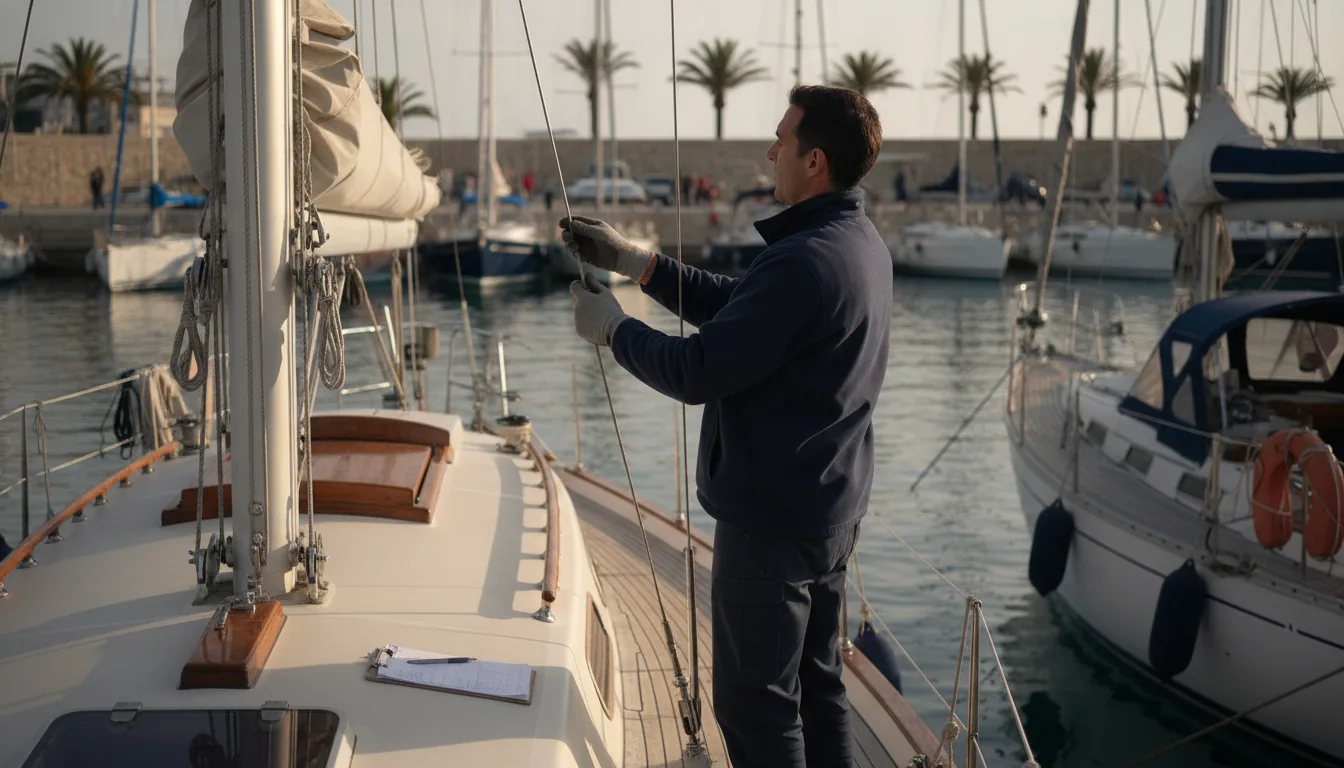
Professional marine surveyors charge approximately $20 per foot of boat length. This means a thorough survey of a 25-foot vessel costs around $500, while a 40-footer runs closer to $800. This investment provides an expert assessment of the vessel’s condition and a written report you can use for insurance purposes, financing applications, and price negotiations.
Standing rigging replacement follows a predictable schedule, with most riggers recommending new wire every 9 years. This timeline applies regardless of visual condition, as stainless steel wire can fail without obvious external signs of deterioration. If the boat you are considering has rigging approaching this age, request documentation of the installation date or factor replacement into your budget.
Your inspection should systematically cover 6 key areas: hull, engine, electrical, deck, rigging, and transom. Each area requires specific knowledge and attention, and deficiencies in any single category can represent significant expense. Approaching the inspection methodically ensures nothing is overlooked in the excitement of finding a potential purchase.
Key takeaway: Marine surveys cost about $20/foot, e.g., $500 for a 25-footer.
Step-by-Step: How to Conduct Your Used Boat Inspection
Following a structured approach ensures comprehensive coverage and helps you maintain objectivity throughout the inspection process.
Step 1: Visual Hull Examination on Land
Arrange to view the boat out of the water if at all possible. Walk around the entire hull, examining the surface from multiple angles. Note any irregularities, discolouration, or repairs. Pay particular attention to the keel attachment area on sailing vessels and the strake lines on planing hulls.
Step 2: Engine Compartment Inspection
Open all engine access points and examine the entire compartment. Check oil levels and condition, inspect belts and hoses for wear, and look for signs of leakage. Note the general cleanliness and organisation of the space, which often reflects maintenance standards.
Step 3: Electrical System Check
Trace visible wiring runs, checking for proper support and protection. Examine the battery installation, including mounting security and ventilation. Test all electrical systems methodically, including navigation equipment, lighting, and pumps.
Step 4: Deck and Hardware Walkthrough
Move systematically across the deck, checking for soft areas and examining each piece of hardware. Test stanchions and lifelines for security. Inspect hatches and ports for proper sealing and smooth operation.
Step 5: Rigging Assessment
On sailing vessels, examine all standing and running rigging. Check each swage fitting and turnbuckle. Inspect the masthead and spreader attachments. Assess the condition of sheets, halyards, and other running rigging.
Step 6: Request Service Records
Ask the seller for all maintenance documentation, including engine service records, equipment manuals, and any survey reports from previous transactions. Complete records indicate conscientious ownership and help you understand the vessel’s history.
Step 7: Conduct Sea Trial
Take the boat out in conditions that allow you to properly assess its performance. Run through the full range of speeds, test the steering through various manoeuvres, and operate all systems while underway. This is your opportunity to experience how the boat actually performs.
Step 8: Consider Professional Survey for Significant Purchases
For any substantial investment, engaging a qualified marine surveyor provides expertise and peace of mind that self-inspection cannot match. The surveyor’s professional opinion carries weight with insurers and lenders, and their detailed report becomes a valuable reference for future maintenance planning.
In short: Inspect boat’s hull out of water, noting defects and specific areas like keel or strakes.
⚠️ WARNING: Never Buy a Used Boat Without a Thorough Inspection: Hidden Issues Can Cost Thousands
Buy With Confidence Using This Inspection Checklist
A thorough inspection transforms the boat buying process from a gamble into an informed decision. By systematically examining each critical area, you understand exactly what condition the vessel is in and what work it may require. This knowledge enables you to negotiate fairly, budget accurately, and avoid unpleasant surprises after purchase.
Whether you conduct the inspection yourself or engage a professional surveyor, the time invested pays dividends in peace of mind and financial protection. Use Aiboatbuddy to find and compare used boats that match your criteria, then apply this checklist to evaluate each candidate thoroughly.
For significant purchases, a professional marine survey remains the gold standard. The modest cost provides expert assessment, documentation for insurance and financing, and the confidence that comes from knowing a trained professional has examined every accessible aspect of your potential new vessel. Armed with proper inspection, you can step aboard your purchase knowing exactly what you have bought.
Bottom line: Thoroughly inspecting a boat ensures informed decision-making, fair negotiation, accurate budgeting, and surprise-free ownership.